
A reverse camera retrofit is one of the few upgrades you appreciate every time you use the car. It is not about avoiding a slightly awkward parking manoeuvre. A properly integrated camera gives you a clear view of low obstacles, kerbs, wheelie bins and vehicles sitting below the rear window line, while retaining the factory look and operation of the vehicle.
For premium, performance and modern technology-equipped cars, the difference between a fitted camera and a correct retrofit matters. The best installations wake with reverse gear, display through the original screen, work with parking sensors and show the right guidance lines for the vehicle. The worst involve an added-on screen, unreliable wireless signal, poor image quality or warning lights after fitting.
What a Reverse Camera Retrofit Should Deliver
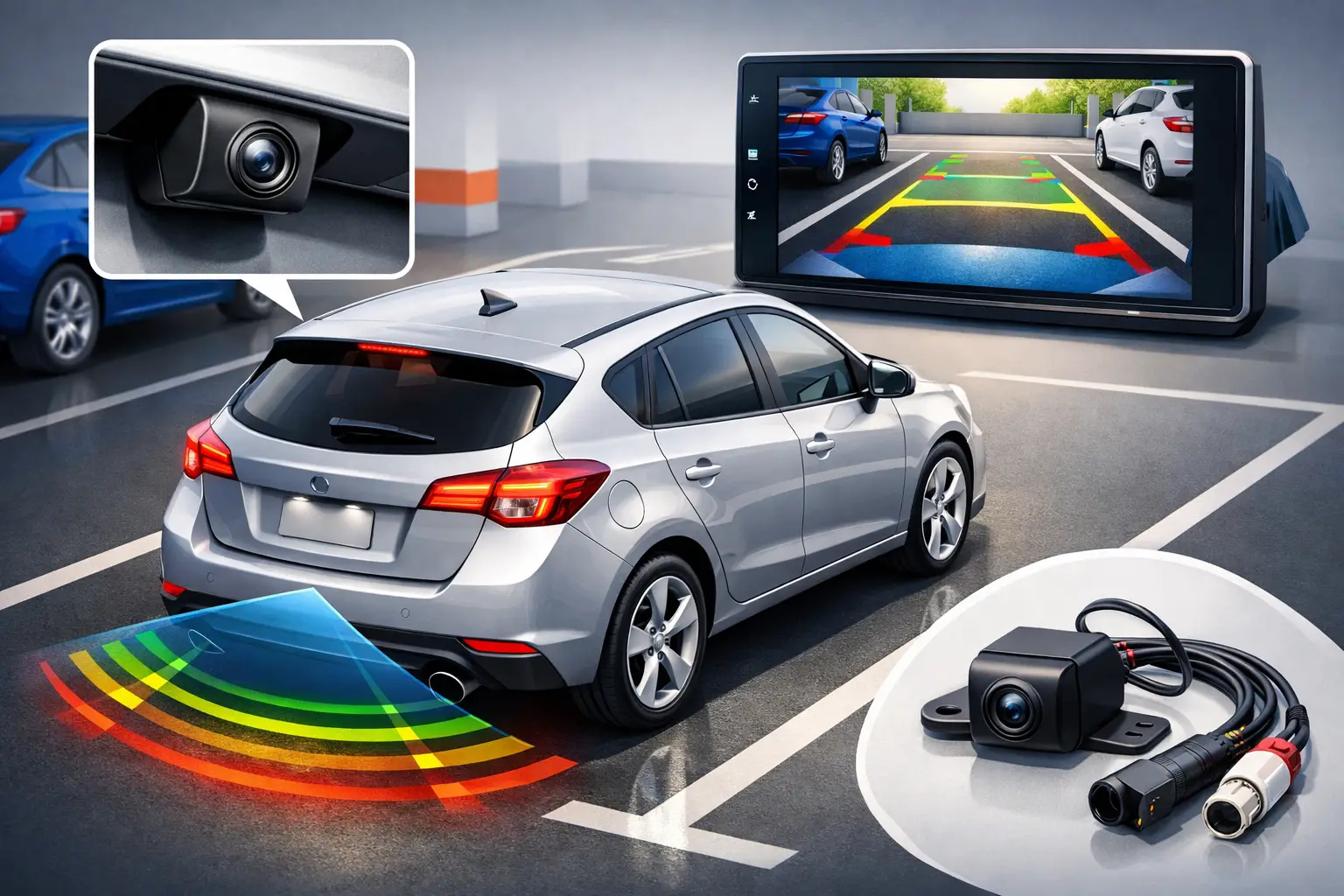
A reverse camera should feel like it was specified when the car was ordered. On a suitable vehicle, that means using the existing infotainment display, retaining the original menu structure where applicable and integrating the image with the parking aid system. The camera should activate promptly when reverse is selected, then return the display to its previous function when the gear is changed.
Factory-style presentation is particularly important on BMW iDrive, Mercedes COMAND and MBUX, Audi MMI, Volkswagen Group infotainment systems and Alfa Romeo displays. These vehicles use multiple control modules, vehicle networks and configuration data. Adding hardware without the required coding can leave features unavailable, trigger faults or create an installation that works inconsistently.
Image quality also matters more than the headline resolution figure. A useful camera needs a sensible field of view, low-light performance and a mounting position that shows the bumper edge without distorting every object behind the car. A camera placed too high, too low or at the wrong angle can make judging distance harder rather than easier.
Dynamic guidelines are another worthwhile feature where supported. Unlike fixed coloured lines, dynamic lines move with steering input to show the likely path of the vehicle. They are particularly useful in larger SUVs, long-wheelbase saloons and cars with limited rearward visibility. Their operation depends on the correct vehicle data being available and, in some cases, correct calibration after installation.
OEM and Aftermarket Camera Options
There is no single answer to every reverse camera retrofit. The right route depends on the vehicle, its existing equipment, the owner’s expectations and the available parts.
A genuine OEM retrofit uses original-style modules, camera hardware, trims and wiring wherever practical. This is normally the preferred option for vehicles where factory equipment can be added correctly. It offers the closest match in appearance, system behaviour and diagnostic compatibility. On the right BMW, Audi, Mercedes or Alfa Romeo, it can also be the most convincing route for owners who care about preserving the car’s specification and presentation.
OEM equipment is not always the most sensible choice. Some cars need expensive control units, replacement display hardware or extensive loom work before a factory system can operate. A high-quality vehicle-specific interface and camera may provide an excellent result at a more proportionate cost, especially where the original system was never designed to support a camera input.
The key distinction is between vehicle-specific integration and a universal shortcut. A properly selected aftermarket solution can still use the original screen, reverse trigger and parking sensor display. It should be fitted with protected wiring, a stable image interface and a camera designed for the vehicle’s tailgate, boot handle or number plate lamp arrangement. Cheap universal kits often compromise the areas that make the retrofit worthwhile.
Compatibility Comes Before Parts Ordering
Two apparently identical cars can need different parts and coding. Model year, infotainment generation, display size, factory parking sensors, camera preparation, trim level and previous modifications all affect what is possible.
For example, a BMW with an earlier iDrive head unit may need a different video interface from a later car with a newer operating system. An Audi with rear parking sensors may support a camera display in a different way from a car with front and rear sensors. On Alfa Romeo models, the body computer configuration and Proxy Alignment process can be central to enabling factory-added equipment without leaving configuration errors behind.
This is why a proper assessment starts with the vehicle identification, installed modules and current software configuration rather than a generic online parts listing. Diagnostic checks can establish whether the car already has an available camera input, whether an original module can be retrofitted and what coding or programming work will be required afterwards.
Previous work on the vehicle also matters. Non-standard head units, aftermarket parking sensors, repaired tailgates, accident damage and water ingress can all affect the installation plan. A camera retrofit is electrical and physical work combined. It needs someone who understands both the vehicle network and the practical reality of routing a loom through a moving tailgate without creating future faults.
The Fitting Work Behind a Reliable Result
The visible camera is the final part of the job, not the whole job. A reliable installation starts with choosing a mounting point that is secure, discreet and protected from water. Depending on the vehicle, this may be integrated into a boot release handle, fitted into a dedicated trim position or installed within a number plate light housing designed for that model.
The wiring then needs to be routed cleanly from the rear of the vehicle to the relevant control unit or infotainment system. Tailgate looms need particular care because they flex every time the boot is opened. Poor routing can lead to broken wires, intermittent images or water entering the vehicle through an incorrectly sealed grommet.
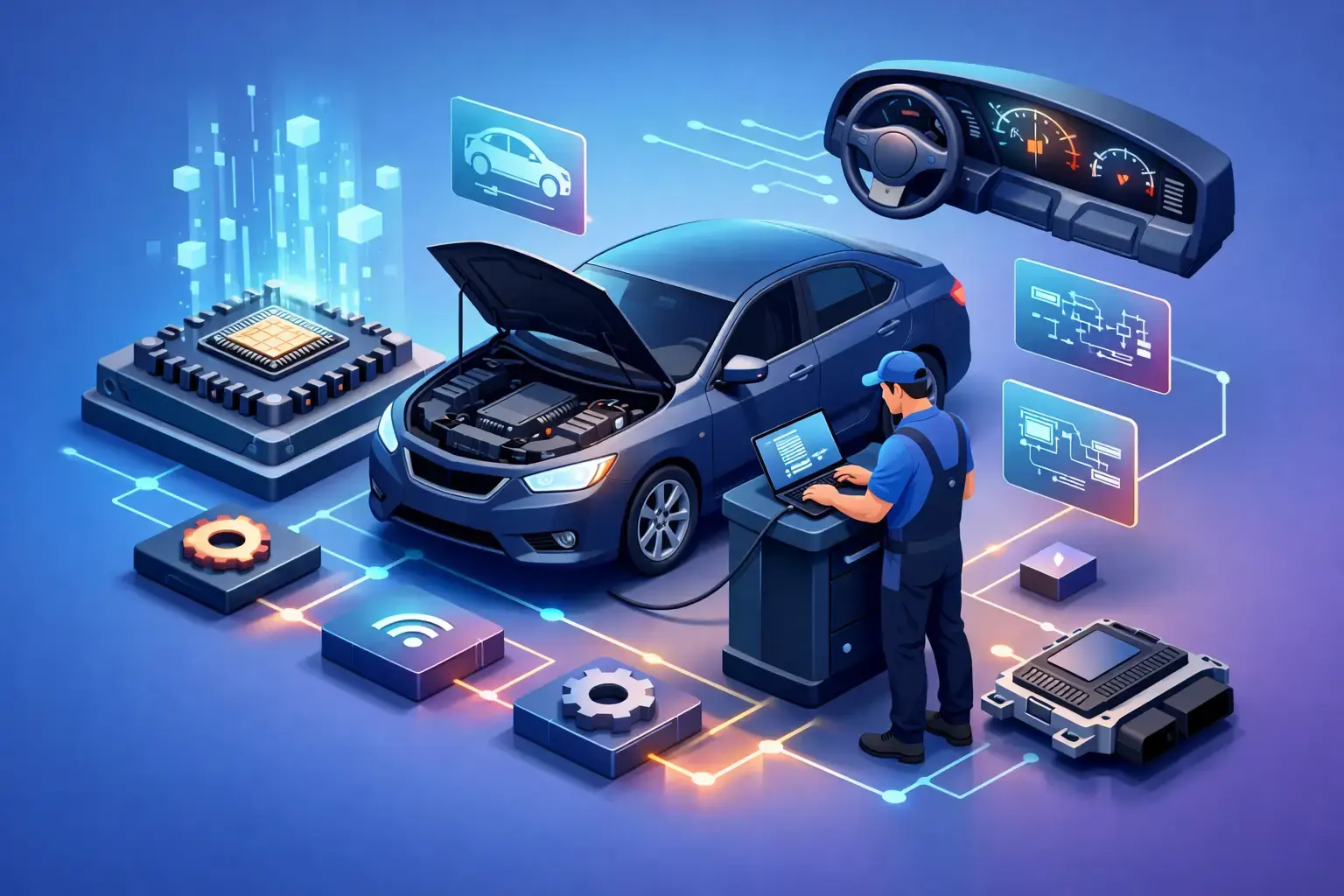
Once the hardware is fitted, the vehicle may require coding, module configuration, programming or calibration. This is where dealer-level diagnostic capability makes a practical difference. The system must recognise the retrofit, the display needs to switch correctly and any retained parking sensor graphics must continue to operate as intended. If dynamic guidelines or a factory camera module are involved, calibration may be required to ensure the image and projected path are accurate.
At VEXEN, retrofit work is approached as a vehicle-specific installation rather than a box-fitting exercise. That means checking compatibility before committing to parts, using appropriate diagnostic procedures and testing the full operation after the work is complete.
When a Camera Is Worth Adding
A camera makes immediate sense for drivers who regularly reverse into tight driveways, multi-storey bays or spaces bordered by low walls and kerbs. It is equally useful on estates, SUVs and performance saloons with high rear decks, small rear windows or aggressive styling that limits the view behind the bumper.
It can also make an older premium car feel far more current without replacing the vehicle. Owners often focus on Apple CarPlay, Android Auto or display upgrades first, but a reverse camera is a daily-use improvement that has a tangible benefit from the first journey. Where a car already has front and rear parking sensors, adding the camera completes the parking package rather than duplicating it.
There are limits. A camera lens will get dirty in winter, especially on a hatchback or estate, and no camera removes the need to check mirrors and surroundings. It is an aid to observation, not a substitute for it. Some vehicles will also have retrofit costs that are difficult to justify if the required modules and screen upgrades are extensive.
For these cases, the sensible approach is to compare the likely installation routes. A camera integrated into the original display may be the right balance. On another vehicle, a genuine OEM system may justify the extra spend because it protects the factory finish and works exactly as intended.
Choosing the Right Retrofit Route
Ask whether the proposed solution uses your existing screen, how the camera is mounted, whether the image is wired rather than wireless, and what coding or calibration is included. You should also know whether factory parking sensors will remain visible and whether the work is reversible if the car is later returned to standard.
A quote should account for the actual vehicle, not just the model badge. A 2016 BMW 3 Series, for example, can have different infotainment hardware from another 2016 BMW 3 Series. The same principle applies across Mercedes, Audi, Volkswagen, Ford and Alfa Romeo ranges. Correct identification at the start prevents unsuitable parts, unexpected labour and compromised functionality.
The right reverse camera retrofit should make parking calmer without making the interior look modified or the vehicle electronics less dependable. Start with compatibility, choose the integration level that suits the car and let the quality of the installation matter as much as the camera itself.
Frequently asked questions
Is an OEM or aftermarket reverse camera better?
It depends on the vehicle. A genuine OEM retrofit offers the closest match in appearance and diagnostic compatibility, but can need expensive control units or extensive loom work. A vehicle-specific interface and camera can give an excellent result at a more proportionate cost, whereas cheap universal kits compromise quality.
What are dynamic parking guidelines?
Dynamic lines move with steering input to show the likely path of the vehicle, unlike fixed coloured lines. They are useful in larger SUVs, long-wheelbase saloons and cars with limited rearward visibility. Their operation depends on correct vehicle data and, in some cases, calibration after installation.
What should I ask before fitting a reverse camera?
Ask whether it uses your existing screen, how the camera is mounted, whether the image is wired rather than wireless, and what coding or calibration is included. Also find out whether factory parking sensors will remain visible and whether the work is reversible if the car is returned to standard.